Pat Steir Pat Steir Pat Steir
Newark / Etats-Unis 1940 Newark / USA 1940 Newark / USA 1940
Huile sur toile
180,5 x 180 ,5cm (chaque élément)
Achat avec l’aide du FRAM, 1982
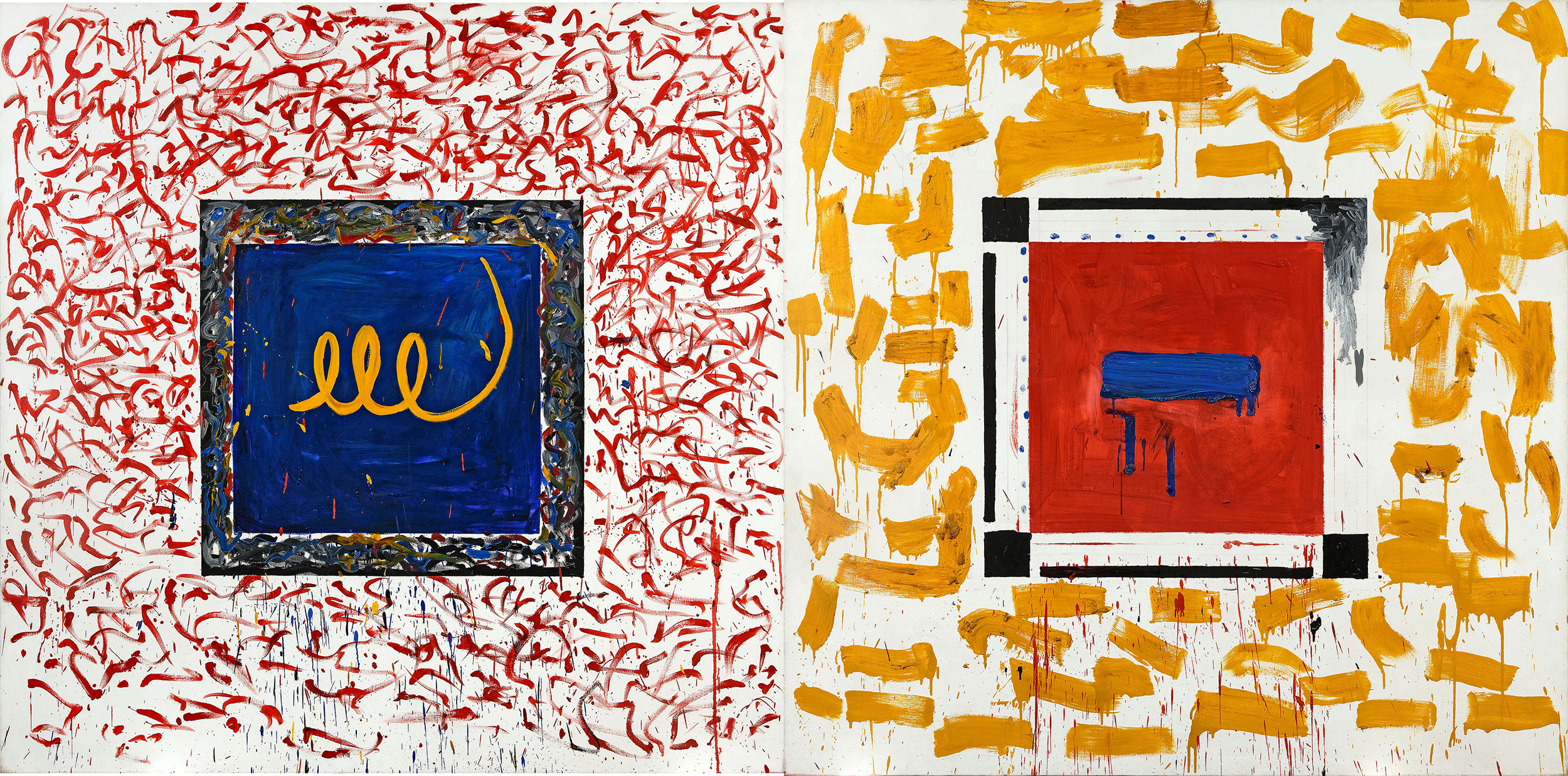
Dans Bop, op, pop, punk, l’artiste privilégie le diptyque. Les toiles sont construites à l’identique avec une alternance de carrés et de coups de brosses colorés, créant une opposition entre l’ordre et le chaos, les formes géométriques lisses et les coulures. Au centre, deux motifs énigmatiques se détachent avec force d’un fond monochrome. Les deux peintures se répondent et entrent en résonnance, notamment grâce aux jeux de couleurs. A la recherche d’un langage pictural, Pat Steir semble se tourner vers un art plus « artisanal », plus « primitif » aux motifs empruntés à la préhistoire, à l’art oriental, tibétain ou amérindien. Ces inscriptions « mystérieuses aux connotations magiques, talismaniques, confèrent au tableau une singulière puissance mystique » (Douglas James Johnson, artiste peintre américain).
Huile sur toile
180,5 x 180 ,5cm (chaque élément)
Achat avec l’aide du FRAM, 1982
In Bop, op, pop, punk, the artist favours the diptych. The canvases are constructed identically with alternating squares and coloured brushstrokes, creating an opposition between order and chaos, smooth geometric shapes and drips. In the centre, two enigmatic motifs stand out strongly against a monochrome background. The two paintings respond to each other and resonate with each other, particularly through the play of colours. In her search for a pictorial language, Pat Steir seems to be turning to a more « artisanal », more « primitive » art with motifs borrowed from prehistory, oriental, Tibetan or Amerindian art. These « mysterious inscriptions with magical, talismanic connotations give the painting a singular mystical power » (Douglas James Johnson).
Huile sur toile
180,5 x 180 ,5cm (chaque élément)
Achat avec l’aide du FRAM, 1982
In Bop, op, pop, punk, l’artista privilegia il dittico. Le tele sono costruite in modo identico con un’alternanza di quadrati e pennellate colorate, creando un’opposizione tra ordine e caos, forme geometriche lisce e sgocciolamenti. Al centro, due motivi enigmatici emergono con forza da uno sfondo monocromo. I due quadri si rispondono e entrano in risonanza, in particolare grazie al gioco dei colori. Alla ricerca di un linguaggio pittorico, Pat Steir sembra rivolgersi ad un’arte più « artigianale », più « primitiva » con motivi presi in prestito dalla preistoria, dall’arte orientale, tibetana o amerindia. Queste « iscrizioni misteriose con connotazioni magiche e talismaniche danno al dipinto un singolare potere mistico » (Douglas James Johnson).