Martial Raysse Martial Raysse Martial Raysse
Golfe-Juan 1936 Golfe-Juan 1936 Golfe-Juan 1936
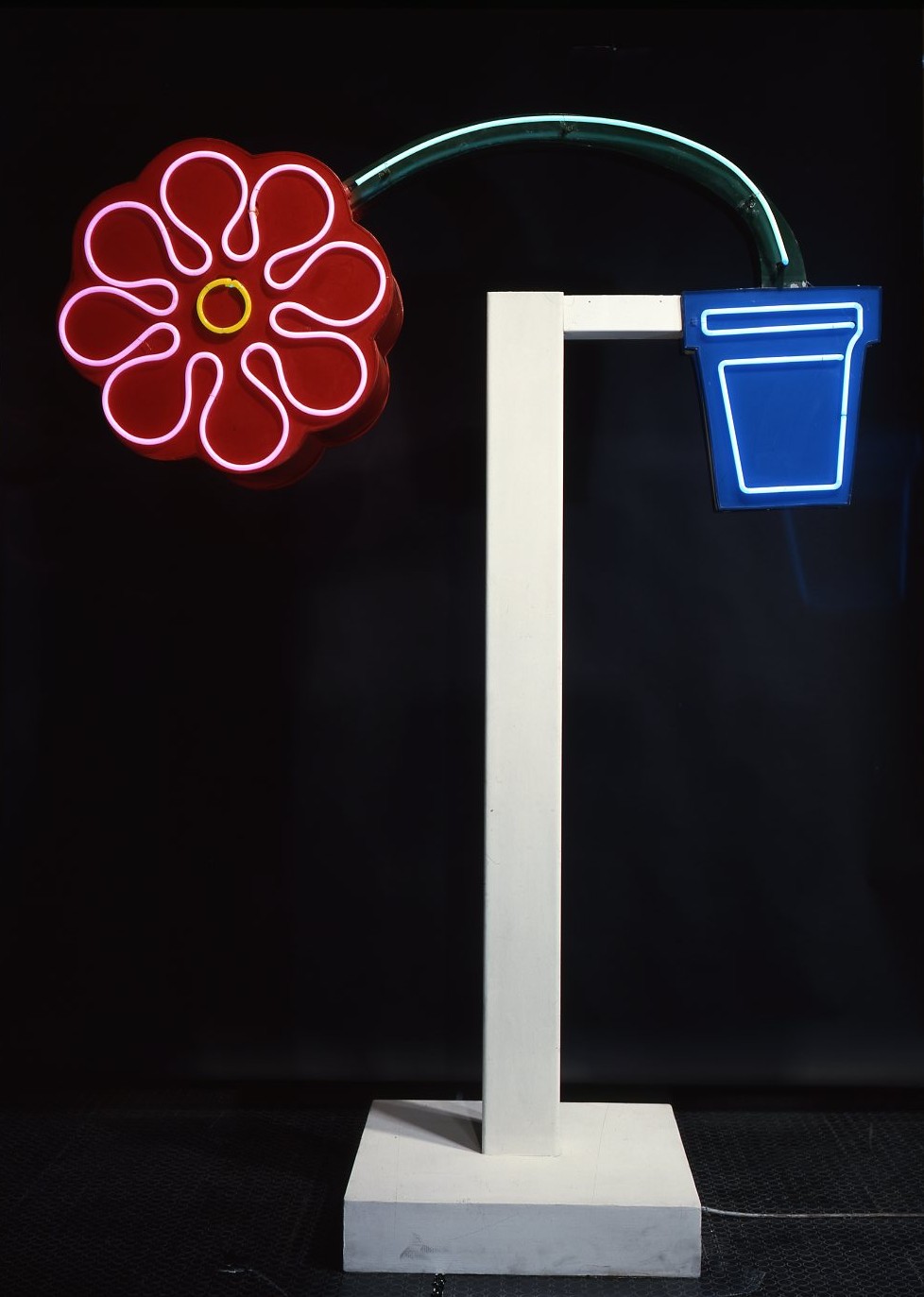
261,5 x 190,5 x 80 cm
Achat, 1981
Martial Raysse se démarque du reste du groupe des Nouveaux Réalistes par l’utilisation d’objets neufs impersonnels et par la joie de vivre qui se dégage de son travail. Les couleurs utilisées sont intenses et rappellent le Pop-Art américain. En 1962, il intègre pour la première fois des néons à ses créations et produit par la suite de nombreux assemblages utilisant la lumière, comme pour Pot et Fleur. L’ensemble est figé à la manière d’un décor hollywoodien ou d’une enseigne lumineuse. Les matériaux symboles de la modernité de l’époque tels que le plastique, les néons ou la peinture fluorescente attirent tout particulièrement le jeune artiste. Ils lui permettent de créer des œuvres colorées, attirantes et dénuées de toute implication affective comme pourrait l’être un objet usé portant les stigmates du temps.
#
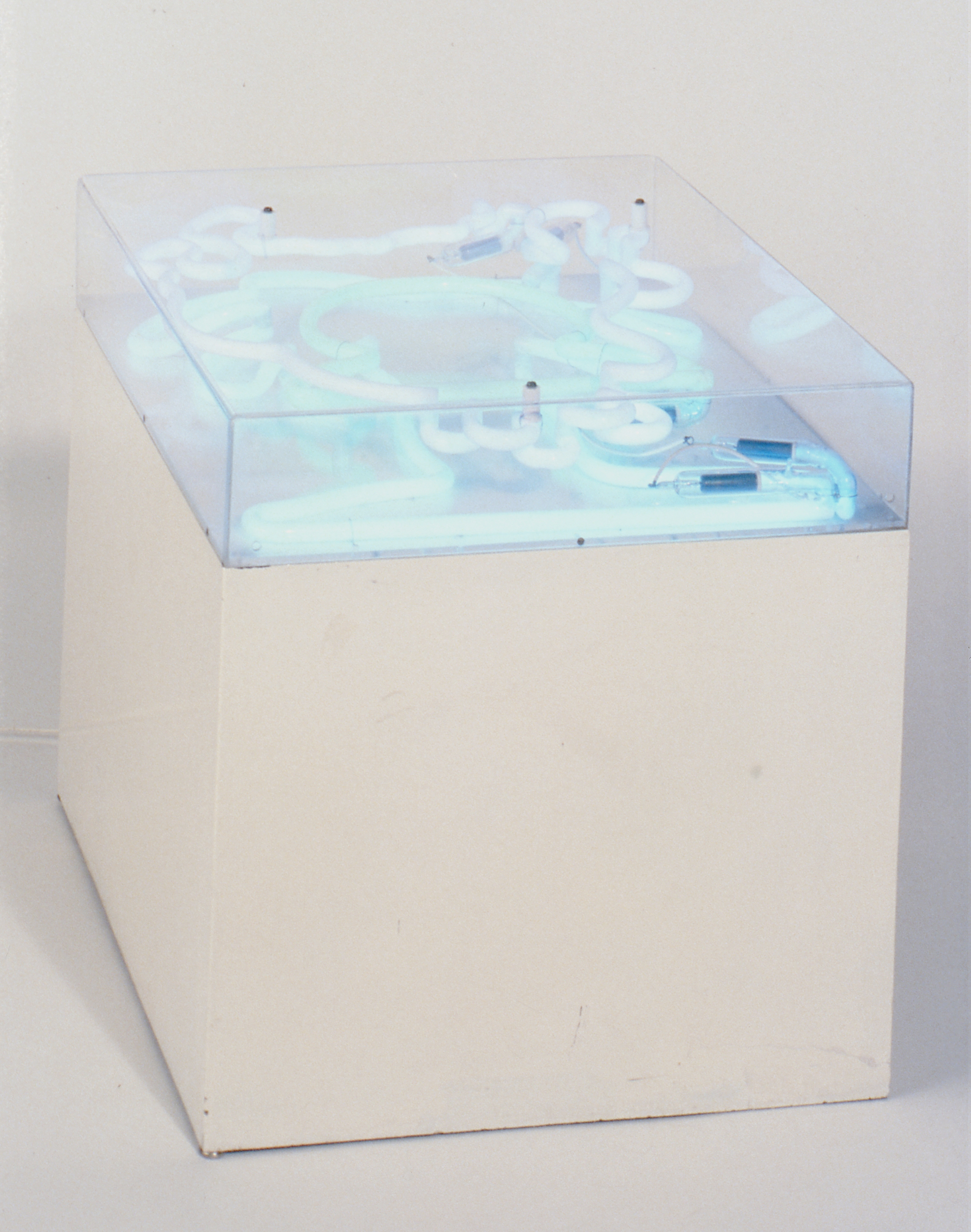
51 x 50 x 63 cm
Achat, 1980
On retrouve dans cette œuvre le polyméthacrylate, matériau plastique que l’artiste a déjà utilisé dans ses travaux précédents les années 1960 pour créer des boîtes contenant des accumulations d’objets de consommation. Ce matériau moderne qui semble inaltérable, comme le souligne l’artiste, est utilisé comme un écrin. Il est tout aussi important dans son travail que le reste des éléments qui constituent ses œuvres. Dans Eléments de vocabulaire les néons, empruntés au monde de la publicité, forment des courbes dans un jeu lumineux proche d’une sorte d’écriture ou d’un logo. Martial Raysse tend ici à simplifier les formes pour accroitre l’impact visuel. Le néon représente pour lui "la couleur vivante, une couleur par-delà la couleur », comme une affirmation de la continuité de la modernité par le renouvellement des techniques et des matériaux.
261,5 x 190,5 x 80 cm
Achat, 1981
Martial Raysse stands out from the rest of the New Realist group by the use of new, impersonal objects and by the joie de vivre that emerges from his work. The colours used are intense and reminiscent of American Pop Art. In 1962, he integrated neon lights into his creations for the first time and subsequently produced numerous assemblages using light, as in Pot and Flower. The whole is frozen in the manner of a Hollywood set or a neon sign. The young artist was particularly attracted to materials that were symbols of the modernity of the time, such as plastic, neon lights and fluorescent paint. They allow him to create colourful, attractive works that are devoid of any emotional implications, as would be the case with a worn object bearing the scars of time.
#
51 x 50 x 63 cm
Achat, 1980
Polymethacrylate, a material that the artist had already used in his previous works in the 1960s to create boxes containing accumulations of consumer objects, is found in this work. This modern material, which seems unalterable, as the artist points out, is used as a case. It is just as important in his work as the rest of the elements that make up his works. In Eléments de vocabulaire, the neon lights, borrowed from the world of advertising, form curves in a luminous play that resembles a kind of writing or logo. Here, Martial Raysse tends to simplify the forms to increase the visual impact. For him, neon represents « living colour, a colour beyond colour », as an affirmation of the continuity of modernity through the renewal of techniques and materials.
261,5 x 190,5 x 80 cm
Achat, 1981
Martial Raysse si distingue dal resto del gruppo del Nuovo Realismo per l’uso di nuovi oggetti impersonali e la gioia di vivere che emerge dal suo lavoro. I colori utilizzati sono intensi e ricordano la Pop Art americana. Nel 1962 integra per la prima volta le luci al neon nelle sue creazioni e successivamente realizza numerosi assemblaggi con la luce, come in Pot and Flower. Il tutto è congelato alla maniera di un set di Hollywood o di un’insegna illuminata. Il giovane artista era particolarmente attratto dai materiali simbolo della modernità dell’epoca, come la plastica, le luci al neon e la vernice fluorescente. Gli permettono di creare opere colorate, attraenti e prive di qualsiasi implicazione emotiva, come potrebbe essere il caso di un oggetto usurato che porta le stigmate del tempo.
#
51 x 50 x 63 cm
Achat, 1980
Il polimetacrilato, un materiale che l’artista ha già utilizzato nelle sue opere precedenti negli anni ’60 per creare scatole contenenti accumuli di oggetti di consumo, si trova in questo lavoro. Questo materiale moderno, che sembra inalterabile, come sottolinea l’artista, è usato come un caso. È altrettanto importante nel suo lavoro quanto il resto degli elementi che compongono le sue opere. In Eléments de vocabulaire, le luci al neon, prese in prestito dal mondo della pubblicità, formano delle curve in un gioco luminoso che si avvicina a una sorta di scrittura o logo. Martial Raysse tende qui a semplificare le forme per aumentare l’impatto visivo. Per lui, il neon rappresenta « il colore vivo, un colore oltre il colore », come affermazione della continuità della modernità attraverso il rinnovamento delle tecniche e dei materiali.