Armand Fernandez dit Arman Armand Fernandez dit Arman Armand Fernandez dit Arman
Nice 1928 – New-York 2005 Nice 1928 - New York 2005 Nizza 1928 - New York 2005
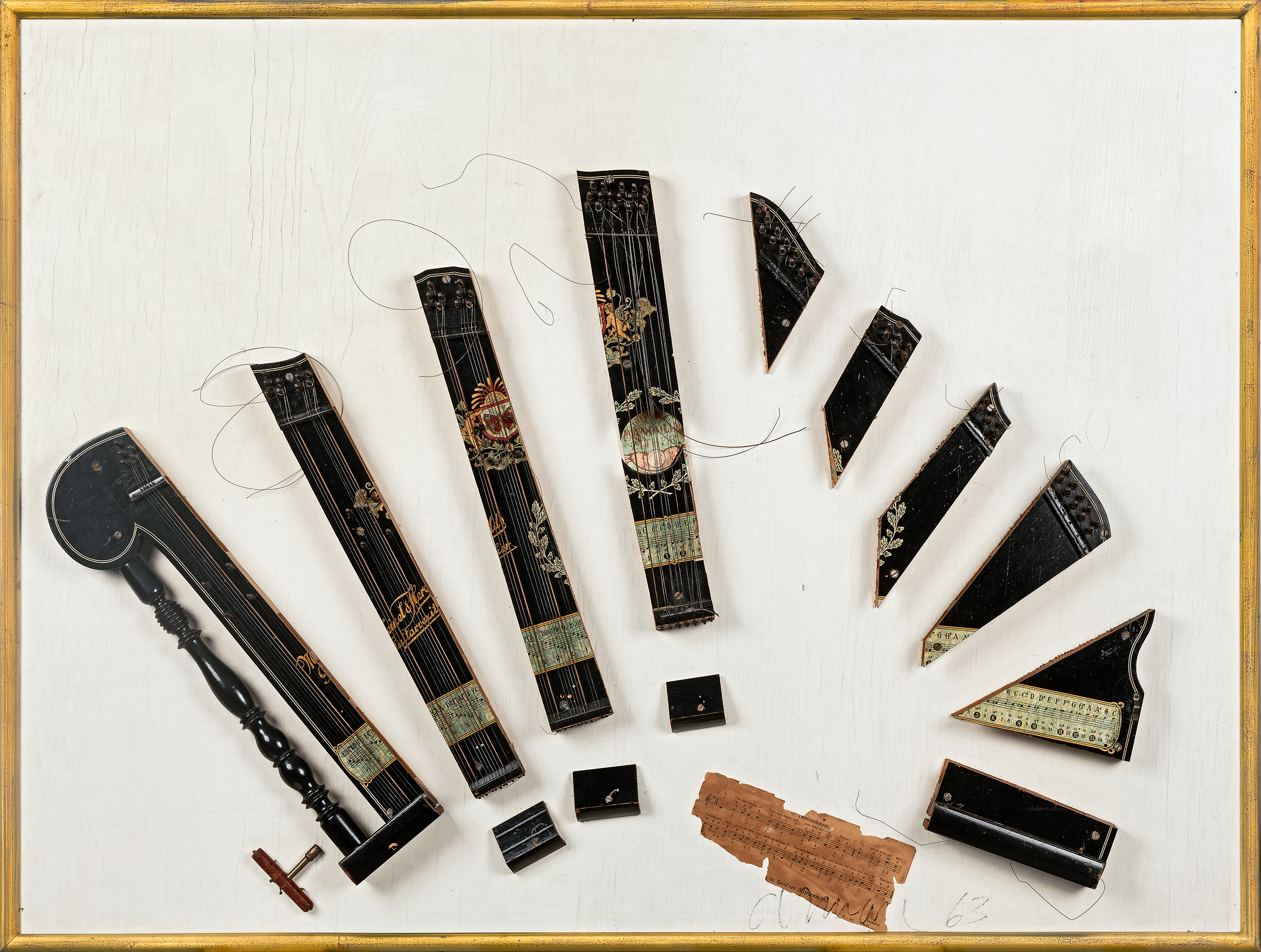
97 x 130 cm
Achat avec l’aide du FRAM, 1982
Les instruments de musique comptent parmi les objets les plus utilisés par l’artiste pour la conception de ses œuvres. Celui qui se définit lui-même comme un « montreur d’objets » nous propose ici la décomposition d’une cithare qui laisse apparaître les différents matériaux qui composent l’instrument. En 2002-2003, Arman renoue avec la peinture de chevalet dans Serious Paintings, associant la recomposition d’instruments de musique à leur « mise en scène » en peinture.
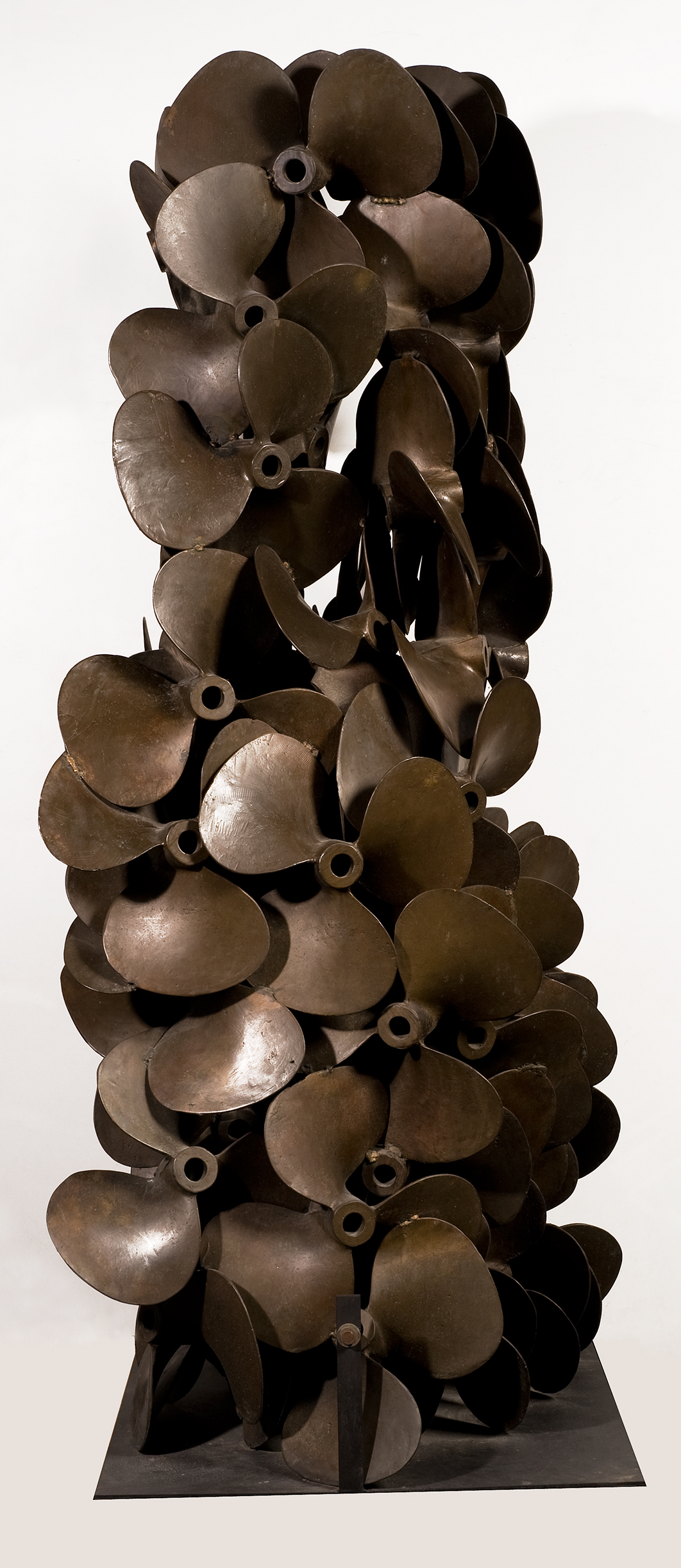
210 x 95 x 90 cm
Achat avec l’aide du FRAM, 1981
Cette accumulation d’une centaine d’hélices de bateau en bronze soudées, semble être répertoriée également sous le titre de Captain Nemo’s accumulation. Cette technique met en valeur le poids et le volume des objets utilisés tout en incluant une notion d’équilibre. Trois autres exemplaires de cette œuvre ont été réalisés : un pour la Suède, un pour les U.S.A et un autre à Vence…
#
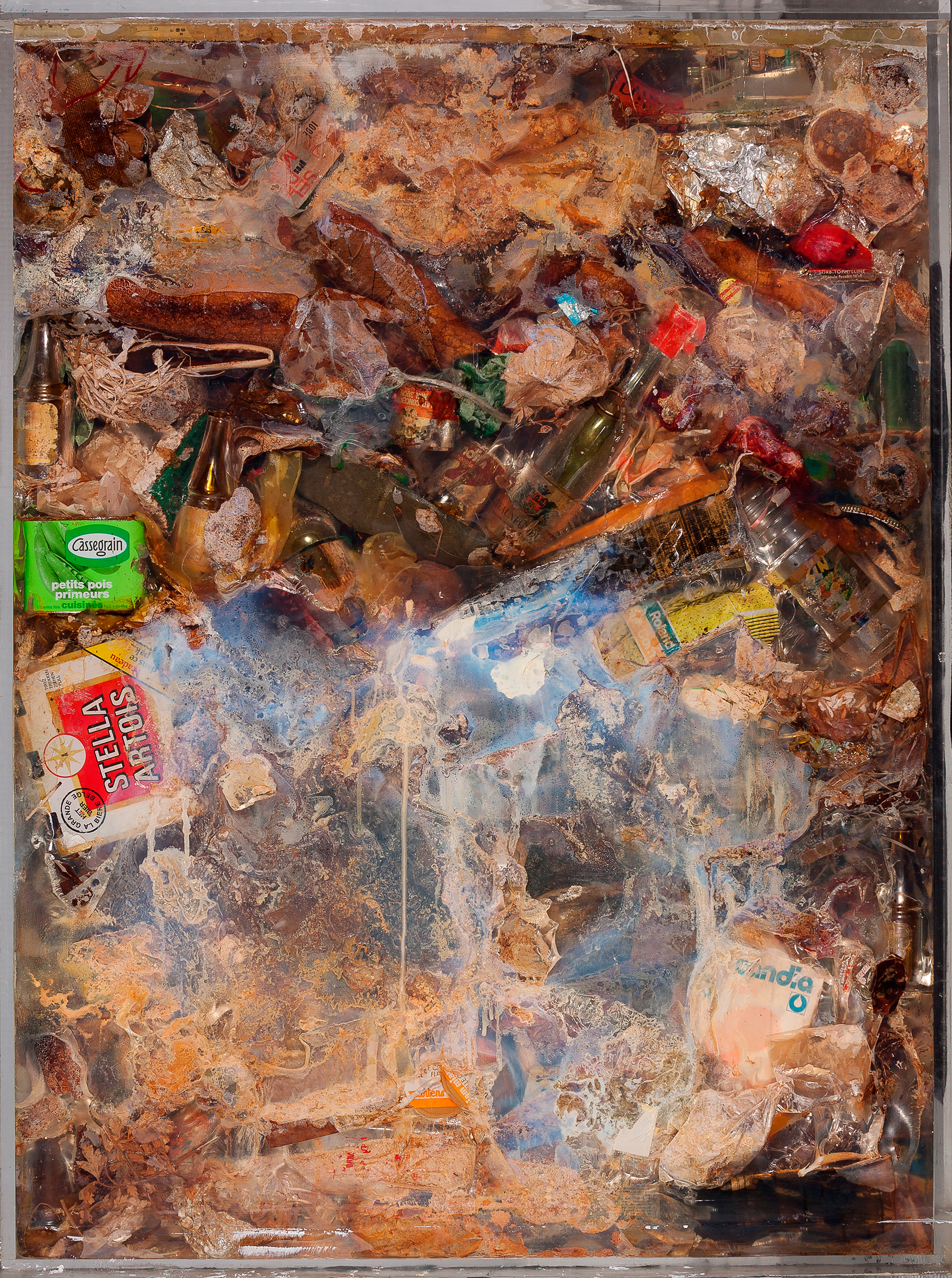
120 x 90 x 12 cm
Achat avec l’aide du FRAM, 1982
Également connu sous le nom Accumulation of garbage in polyester, l’œuvre se compose d’objets ménagers du quotidien moulés de façon aléatoire dans une résine protégée par un conteneur en Plexiglas de fabrication artisanale faisant office de poubelle. À la longue, les objets contenus à l’intérieur s’altèrent, montrant le vieillissement des matières, tout comme celui de la boîte en Plexiglas elle-même, dont la transparence se ternie avec le temps (conséquence non recherchée lors de la création de l’œuvre).
Cette œuvre met l’accent sur le regard acerbe, parfois provocateur, mais non sans humour de l’artiste et des Nouveaux Réalistes sur la société de consommation.
Les objets à usage unique se développent à cette période. Les consommateurs jettent et rachètent sans se soucier de ce que deviennent les déchets. Ici, Arman confronte le spectateur/consommateur avec « ce qui le dégoûte » en le sublimant à l’aide de la résine qui forme un écrin.
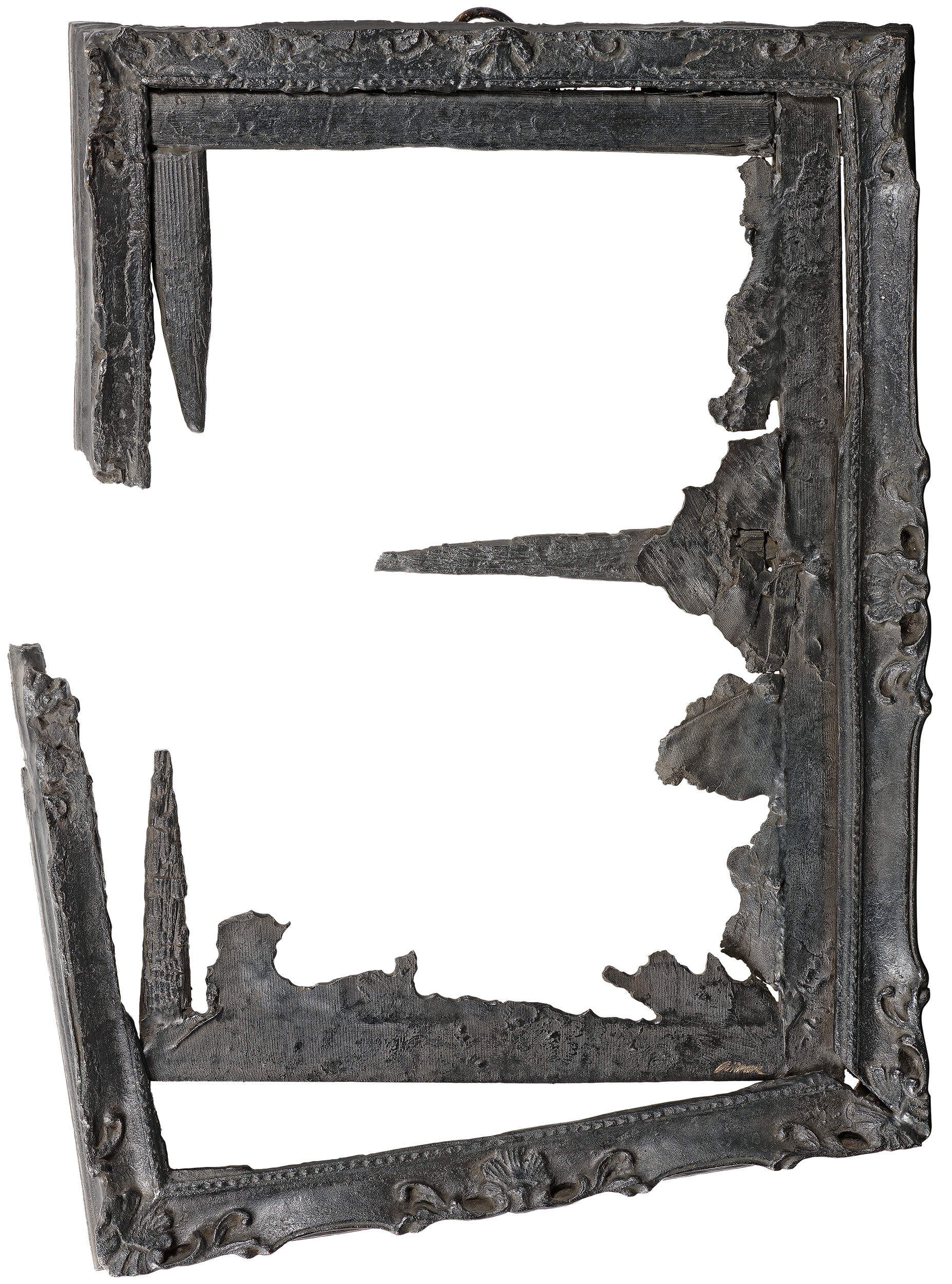
88 x 64 x 5,5 cm
Achat avec l’aide du FRAM, 1985
À partir de 1963, Arman ajoute la combustion à ses modes de traitement des objets en cette année où il expose à New York et y acquiert une résidence. C’est dans les années 1980 que l’éventail de sa production et de ses techniques se diversifie.
L’œuvre Painting appartient à une série de huit autres productions. Le cadre calciné d’un tableau propre aux Combustions, puis moulé dans du bronze, traduit sa volonté d’anéantir sa fonction première. A travers sa pratique gestuelle et destructrice, que l’on pourrait apparenter à une véritable performance, Arman donne à voir une nouvelle dimension des objets, parfois trop sacralisés, de notre quotidien.
97 x 130 cm
Achat avec l’aide du FRAM, 1982
Musical instruments are among the objects most used by the artist for the conception of his works. The artist who defines himself as a « showman of objects » offers us here a decomposition of a zither that reveals the different materials that compose the instrument. In 2002-2003, Arman returned to easel painting in Serious Paintings, combining the recomposition of musical instruments with their « staging » in painting.
210 x 95 x 90 cm
Achat avec l’aide du FRAM, 1981
This accumulation of about 100 welded bronze boat propellers, seems to be listed also under the title Captain Nemo’s accumulation. This technique emphasises the weight and volume of the objects used while including a notion of balance. Three other copies of this work were made : one for Sweden, one for the U.S.A. and another in Vence...
#
120 x 90 x 12 cm
Achat avec l’aide du FRAM, 1982
Also known as Accumulation of garbage in polyester, the work consists of random household objects from everyday life moulded in resin protected by a homemade Plexiglas container acting as a bin.
Over time, the objects contained within alter, showing the ageing of the materials, as well as that of the Plexiglas box itself, whose transparency fades over time (a consequence not intended at the time the work was created).
This work emphasises the acerbic, sometimes provocative, but not humourless view of the artist and the Nouveaux Réalistes on the society of consumption.
Single-use objects were developing during this period. Consumers throw away and buy back without worrying about what happens to the rubbish. Here, Arman confronts the spectator/consumer with « what disgusts him » by sublimating it with the help of resin considered as a case.
88 x 64 x 5,5 cm
Achat avec l’aide du FRAM, 1985
From 1963 onwards, Arman added combustion to his modes of treating objects in that year when he exhibited in New York and acquired a residence there. It was in the 1980s that the range of his production and techniques diversified.
The work Painting belongs to a series of eight other productions. The charred frame of a painting from Combustions, then cast in bronze, expresses his desire to annihilate the object’s primary function. Through his gestural and destructive practice, which could be likened to a real performance, Arman gives a new dimension to the sometimes overly sacred objects of our daily lives.
97 x 130 cm
Achat avec l’aide du FRAM, 1982
Gli strumenti musicali sono tra gli oggetti più utilizzati dall’artista nella progettazione delle sue opere. L’artista che si definisce showman di oggetti" ci offre qui una decomposizione di una cetra che rivela i diversi materiali che compongono lo strumento.
Nel 2002-2003, Arman torna alla pittura da cavalletto in Serious Paintings, combinando la ricomposizione di strumenti musicali con la loro « messa in scena » nella pittura.
210 x 95 x 90 cm
Achat avec l’aide du FRAM, 1981
Questo accumulo di cento eliche di barca in bronzo saldate, sembra essere elencato anche sotto il titolo l’accumulo del capitano Nemo. Questa tecnica enfatizza il peso e il volume degli oggetti usati mentre include una nozione di equilibrio. Sono state fatte altre tre copie di quest’opera : una per la Svezia, una per gli Stati Uniti e un’altra a Vence...
#
120 x 90 x 12 cm
Achat avec l’aide du FRAM, 1982
Conosciuto anche come Accumulo di spazzatura in poliestere, l’opera consiste in oggetti casuali di casa di tutti i giorni modellati in resina protetti da un contenitore di Plexiglas fatto in casa che funge da cestino. Con il tempo, gli oggetti contenuti all’interno si alterano, mostrando l’invecchiamento dei materiali, così come quello della stessa scatola di plexiglas, la cui trasparenza si appanna con il tempo (una conseguenza non prevista al momento della creazione dell’opera).
Quest’opera sottolinea la visione acerba, a volte provocatoria, ma non senza umorismo, dell’artista e dei Nuovi Realisti sulla società del consumo.
In questo periodo si stavano sviluppando oggetti monouso. I consumatori buttano via e ricomprano senza preoccuparsi di cosa succede alla spazzatura. Qui, Arman affronta lo spettatore/consumatore con « ciò che lo disgusta » sublimandolo con l’aiuto della resina considerata come un caso.
88 x 64 x 5,5 cm
Achat avec l’aide du FRAM, 1985
A partire dal 1963, Arman aggiunge combustione ai suoi modi di trattare gli oggetti in quell’anno in cui espone a New York e vi acquisisce una residenza. Fu negli anni ’80 che la gamma della sua produzione e delle sue tecniche si diversificò.
L’opera Pittura appartiene a una serie di altre otto produzioni. La cornice carbonizzata di un dipinto specifico di Combustioni, poi fusa in bronzo, traduce il suo desiderio di annientare la funzione primaria dell’oggetto. Attraverso la sua pratica gestuale e distruttiva, che potrebbe essere paragonata a una vera e propria performance, Arman dà una nuova dimensione agli oggetti, a volte troppo sacri, della nostra vita quotidiana.